
Artifacts (Lore)
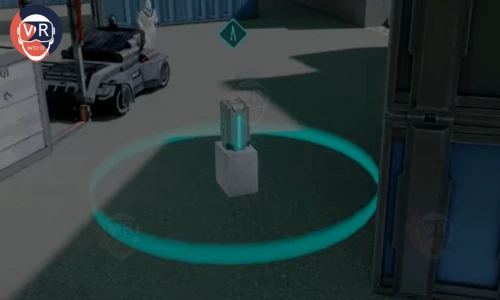
Artifacts are the physical remnants of humanity’s once-unified knowledge archive, the Etana.
Each Artifact is a hardened data node containing encrypted fragments of information that survived the collapse of centralized systems.
Scattered across the Old World, Artifacts are the last intact vessels of humanity’s collective memory.
What are Artifacts?
Artifacts are self-contained data repositories engineered to preserve information under extreme conditions. Unlike conventional servers, they were designed for long-term isolation, capable of operating without network connectivity or maintenance.
Each Artifact contains a segmented portion of the Etana.
No single Artifact holds a complete record, understanding emerges only through reconstruction and synthesis across multiple nodes.
Why they exist
As the Etana expanded, the risk of catastrophic data loss increased. To mitigate this, its creators distributed the archive into physical nodes, ensuring that no single failure could erase humanity’s knowledge.
This decentralization also served as a safeguard against misuse. By fragmenting information, the Etana required effort, interpretation, and intent to unlock its full potential.
What do Artifacts contain
Artifact contents vary widely depending on their original designation. Data may include:
- Scientific and medical research
- Engineering and industrial schematics
- Historical records and timelines
- Cultural archives, languages, and art
- Environmental and planetary data
Some Artifacts also contain incomplete or context-dependent data, requiring correlation with other nodes to be fully understood.
Encryption and access
Artifacts are protected by layered encryption systems. This encryption is not solely defensive, but intentional in its complexity, designed to prevent direct exploitation without comprehension.
Recovered data often lacks immediate explanation, reinforcing the need for cross-referencing multiple Artifacts to restore context and meaning.
Access, or rather hacking, happens when you use a device and locate the points towards eachother.

Artifact locations
Artifacts were deliberately placed in geographically diverse and often remote locations. Many now reside in contaminated regions of Earth, abandoned facilities, or forgotten heritage sites.
Their isolation has preserved them, but has also made recovery difficult and dangerous.
There are a few known locations which can be reused multiple times:
Timeline
Distribution
Artifacts are created as physical extensions of the Etana, each assigned a specific data scope and deployed across the planet.
Isolation
Global infrastructure collapses, severing Artifacts from centralized systems and leaving them dormant but intact.
Abandonment
As civilization retracts from large portions of Earth, Artifacts are left behind in the Old World.
Rediscovery
In the present era, Artifacts are actively sought for the knowledge they contain, becoming focal points of conflict.
Why they Matter
Artifacts represent more than lost data. They are keys to understanding humanity’s past decisions, failures, and achievements.
Each recovered Artifact restores a fragment of history and expands the potential paths forward. Until all are recovered, humanity’s story remains incomplete.
A fragmented archive
Artifacts were never meant to stand alone. They are pieces of a greater whole—silent, enduring, and waiting to be reassembled into the Etana once more.
